Exploring Timeless Expression: An Interview with Kyogen Master - Nomura Manzo
A Project Connecting Tradition and Modern Entertainment
As part of my current project exploring the intersection of traditional Japanese performing arts and modern entertainment, I have been conducting interviews with a wide range of individuals, from traditional performers to modern-day idols.
Through this project, I aim to understand why diverse forms of expression, passed down through the centuries, continue to resonate with audiences today. One of the most profound experiences of this journey was interviewing Nomura Manzo, a Kyogen master who carries a legacy spanning over 600 years.
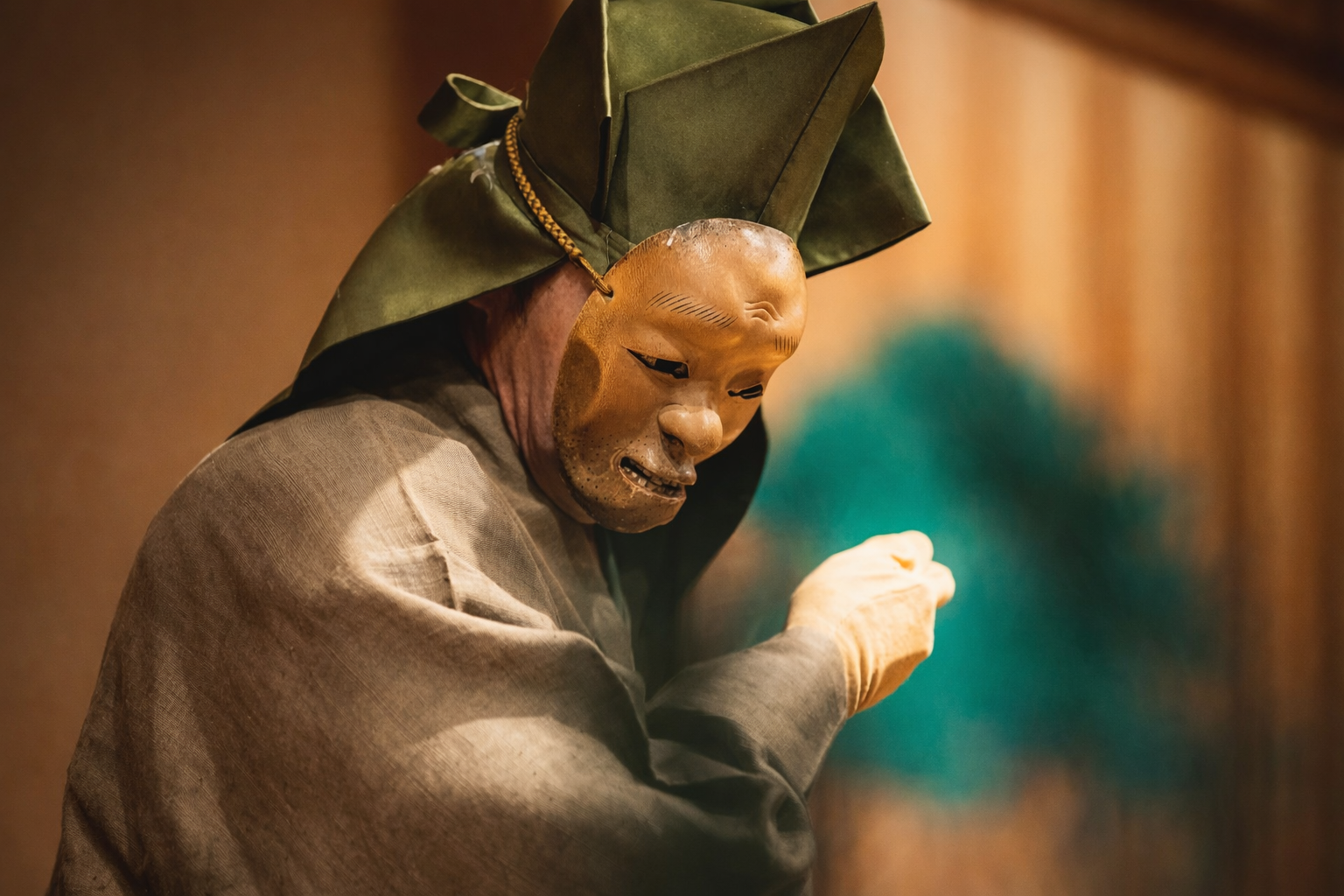
Introducing Nomura Manzo
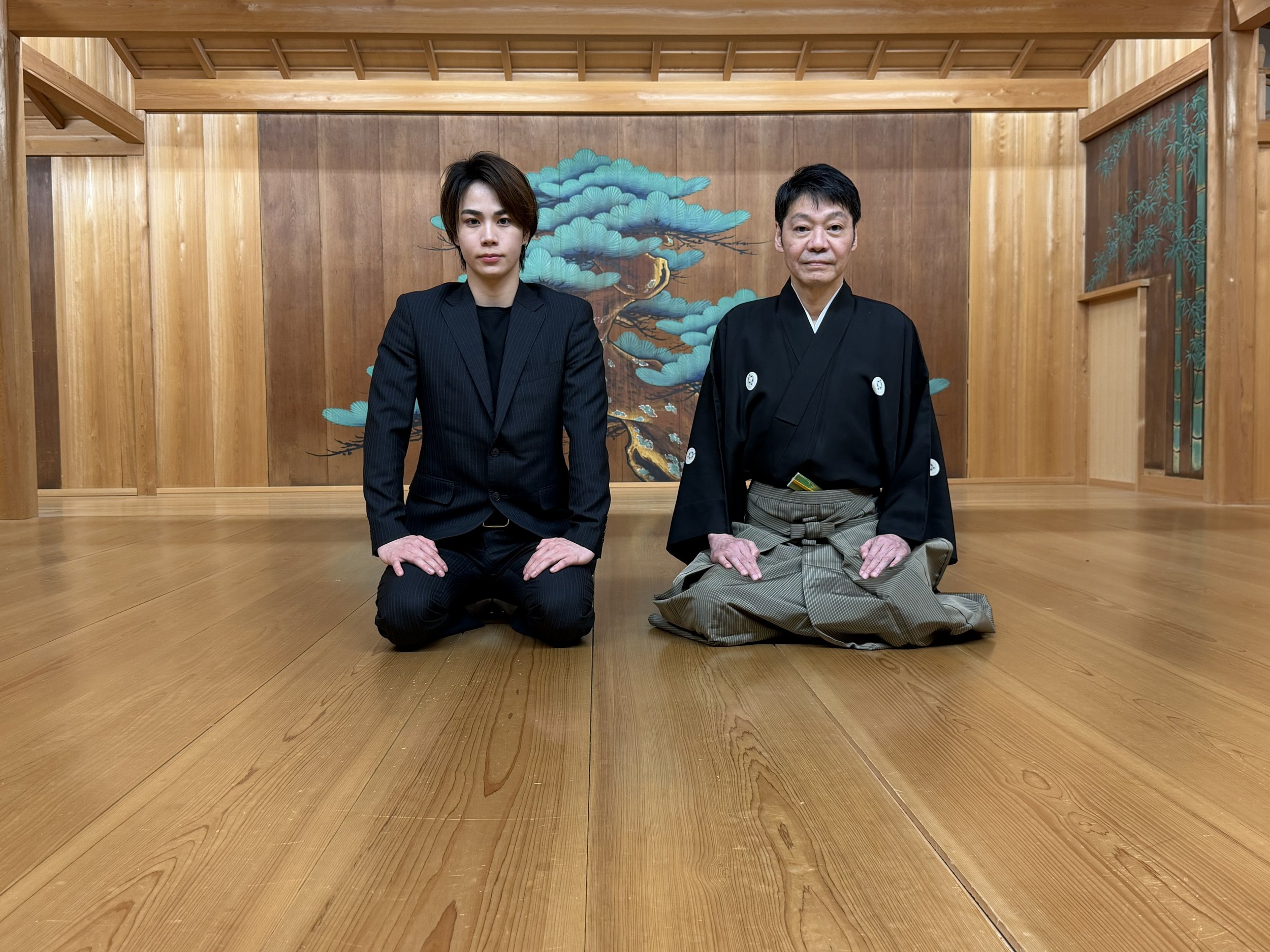
Nomura Manzo IX is the head of a prestigious family with a 300-year history. He is a figure who preserves tradition while expanding the reach of Kyogen with a modern sensibility.
・Successor of a 300-Year Tradition: He is the 9th Generation Head of the Nomura Manzo Family.
・Living National Treasure Status: He is recognized by the Japanese government as a “Holder of Important Intangible Cultural Property (Collective Recognition)” for Nohgaku.
・Leader of "Yorozu Kyogen": He leads one of the major organizations in the Kyogen world, performing across Japan and actively participating in international tours in Asia and Europe to promote Kyogen globally.
・Academic and Cross-Genre Influence: He serves as an external lecturer for the University of Tokyo’s Executive Management Program (EMP) and collaborates across genres, from appearing in NHK "Taiga" dramas to performing with pop artists like Momoiro Clover Z.
・Innovation through "Gendai Kyogen": Alongside popular comedian Kiyotaka Nanbara, he founded "Gendai Kyogen" (Modern Kyogen), which fuses classical techniques with contemporary humor to keep the art form "alive."
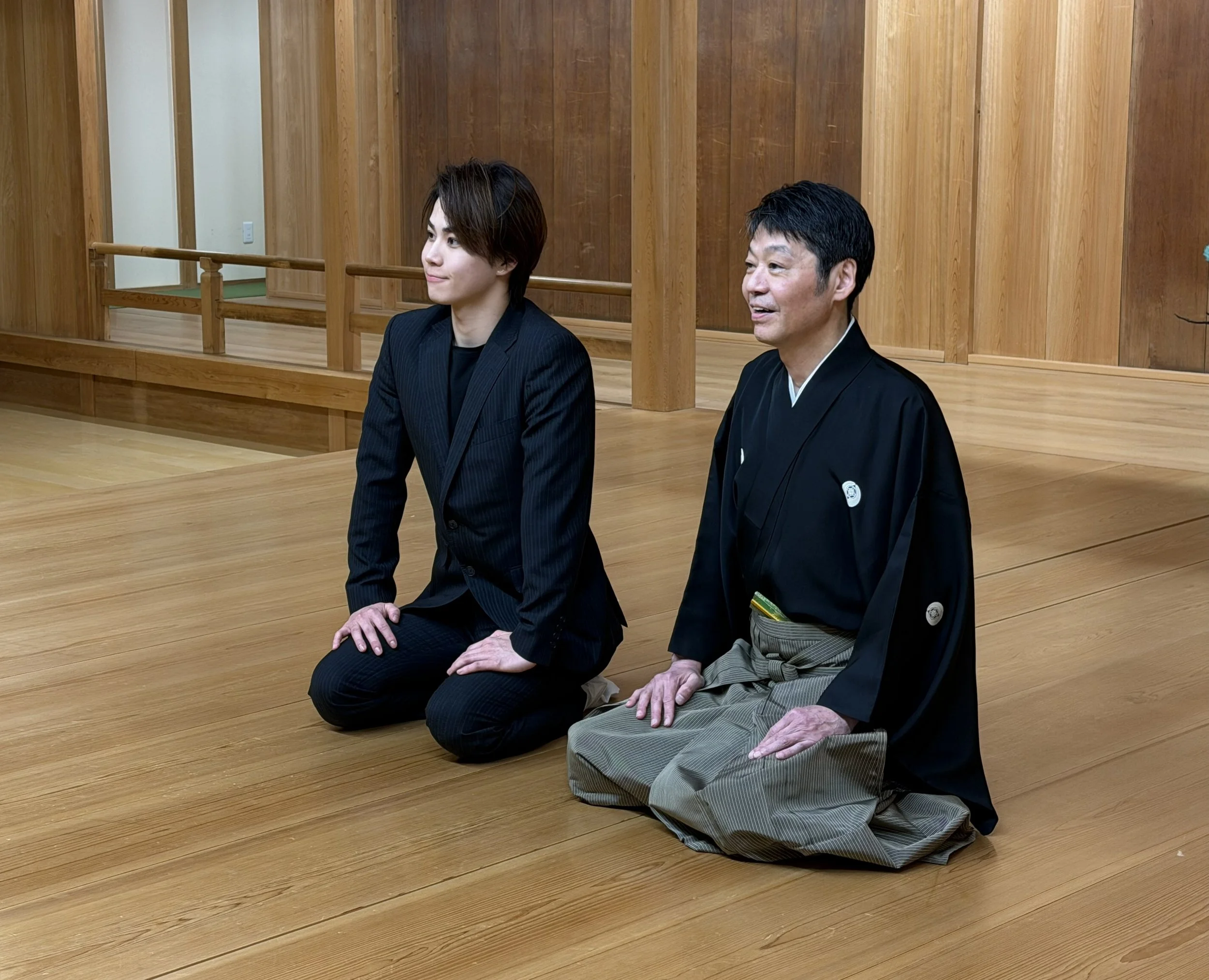
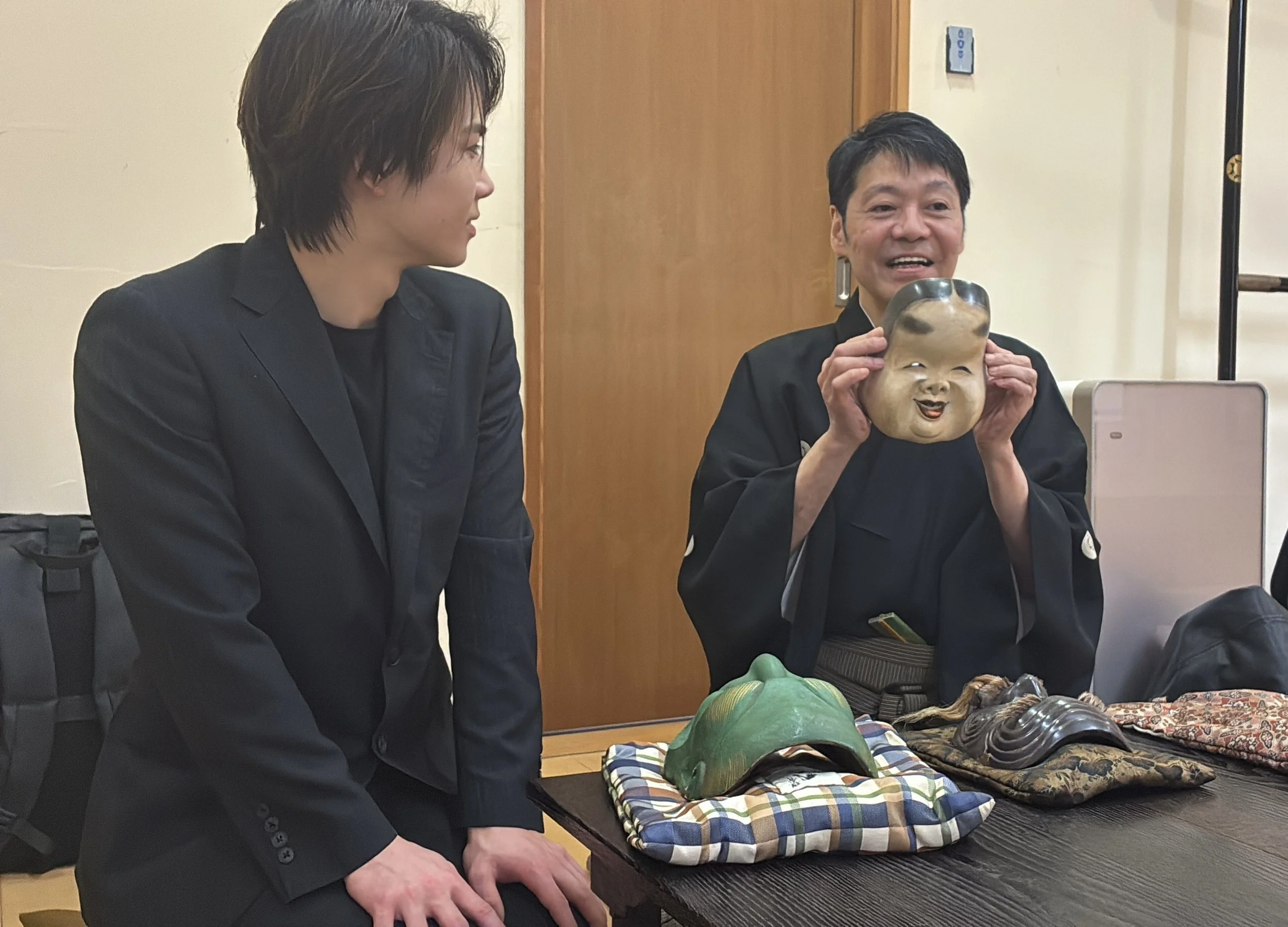
I was granted the rare privilege of meeting Nomura Manzo at his solemn rehearsal space (okeiko-ba) for this interview. My heartfelt reflections are summarized below.
The Weight of Inheriting a Legacy
During our interview, Nomura Manzo spoke about what it truly means to inherit a name passed down through generations. He shared that it took him about 10 years to feel that the name "Manzo" truly belonged to him. He emphasized that the name carries a responsibility that goes beyond technical skill; it demands a specific level of dignity and character.
He compared this role to that of a Yokozuna in Sumo, where one is expected to possess not only strength but a powerful presence and integrity. This conversation made me realize that "self" in traditional arts is not something that begins and ends with the individual, it is formed through a continuous dialogue with the past.
Expression That Connects People Across Eras
What struck me most was his perspective on why Kyogen still moves people today. He emphasized that while cultures, languages, and eras change, the core of the human experience — laughter, failure, and the complexity of relationships — remains the same.
Kyogen expresses these universal emotions through a uniquely Japanese form, yet its essence is understood by people worldwide. This reinforced my understanding that the power of expression lies not just in the "form," but in its ability to mirror the fundamental parts of being human.
The Balance of Tradition and Innovation
A major theme of our discussion was the difficulty of adapting to the modern world while protecting tradition. Nomura Manzo explained that while core values such as respect and awe must never change, elements like language, production, and presentation must evolve with the times.
He described this process as "protecting the original taste while creating a new entrance." This resonates deeply with the challenges faced in modern entertainment: the need to innovate and stay relevant without losing one's unique identity.
Conclusion: The Essence of Entertainment Across Generations
This interview has deepened my understanding of the heart of entertainment. Whether it is Kyogen, which has lasted for centuries, or modern entertainment, the goal remains the same: to move people’s hearts, communicate a message, and share emotions.
Through this project, I am beginning to see that tradition and modernity are not opposites; they are part of a continuous evolution. Learning from a front-line performer like Nomura Manzo has inspired me to continue exploring how cultural expression is preserved, how it changes, and how it is shared across borders and generations.
Nomura Manzo, the experience of meeting you and feeling the atmosphere of your rehearsal space remains as vivid as if it were yesterday. I discovered later that my grandparents were great fans of yours, and being able to share this experience with my family was a special moment for us. I look forward to seeing you again at a performance. Thank you very much.
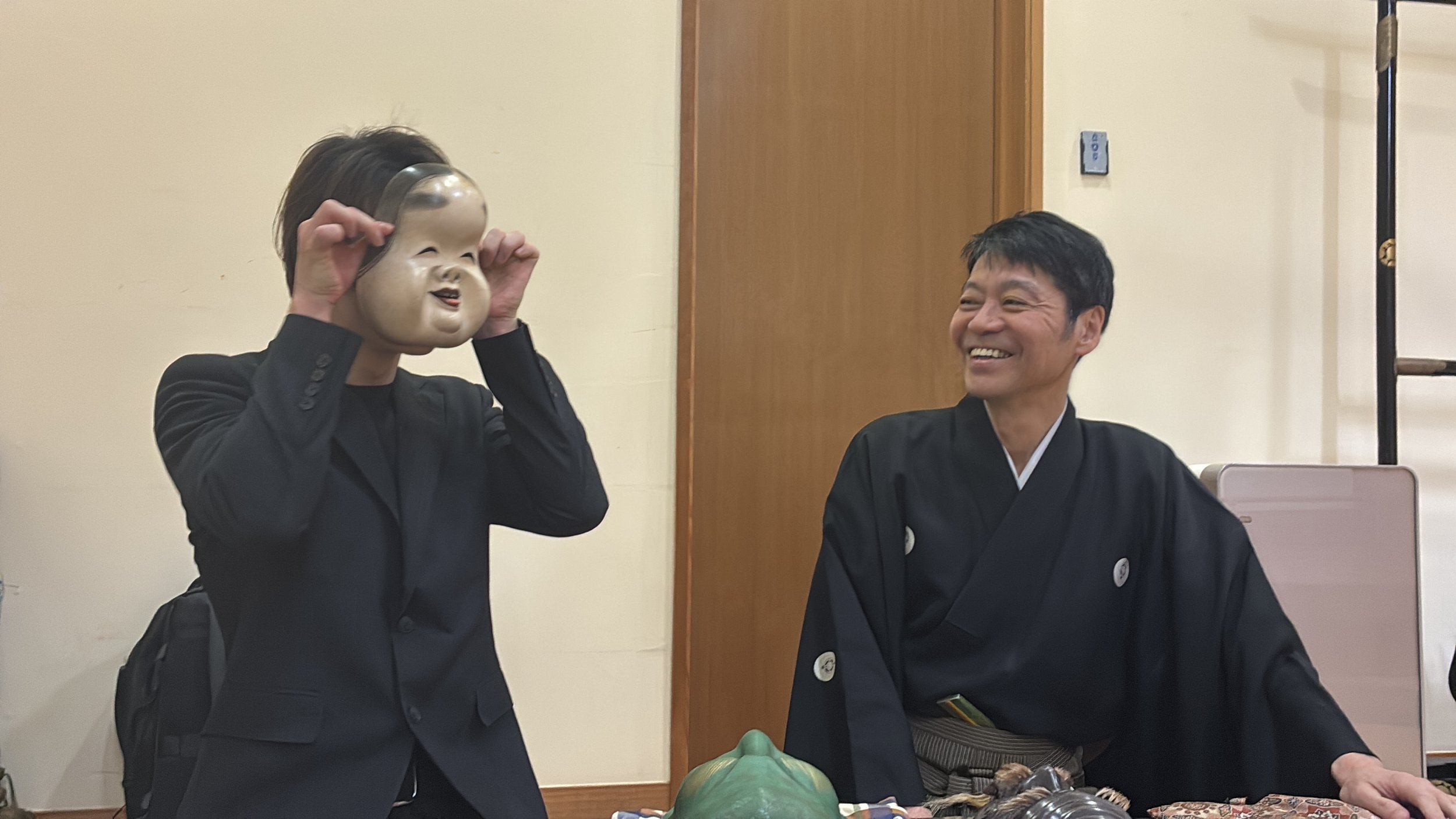
In my next post, I will summarize our discussion regarding the traditional masks and props used in Kyogen.