Interview with a Geiko: Experience of Traditional Makeup
My family has been running a comprehensive beauty distribution business since 1973, so I have always tried to stay attentive to developments in beauty.
This year, the hair and makeup team for the film Kokuho was nominated for the
“Best Makeup and Hairstyling” category at the Academy Awards (Oscars). Although it did not win, I was deeply impressed. When I watched the film, I realized that rather than adapting modern idol-style makeup into a classical form, it faithfully reproduced traditional makeup as it truly is.
I became determined to meet an active geiko in person. During spring break, I returned to Japan and visited Kyoto.
With the help of a friend, I was fortunate enough to observe and spend time with a geiko named Ichikoto-san during her makeup process—an incredibly special experience. I also had the rare opportunity to visit Honjo (an ochaya/teahouse), a representative establishment in Kyoto, and spend time with a practicing geiko.
This type of experience is extremely rare.
I was able to step into a space that is normally not open to the public and participate in a truly special cultural experience. I am sincerely grateful for everyone’s kindness.
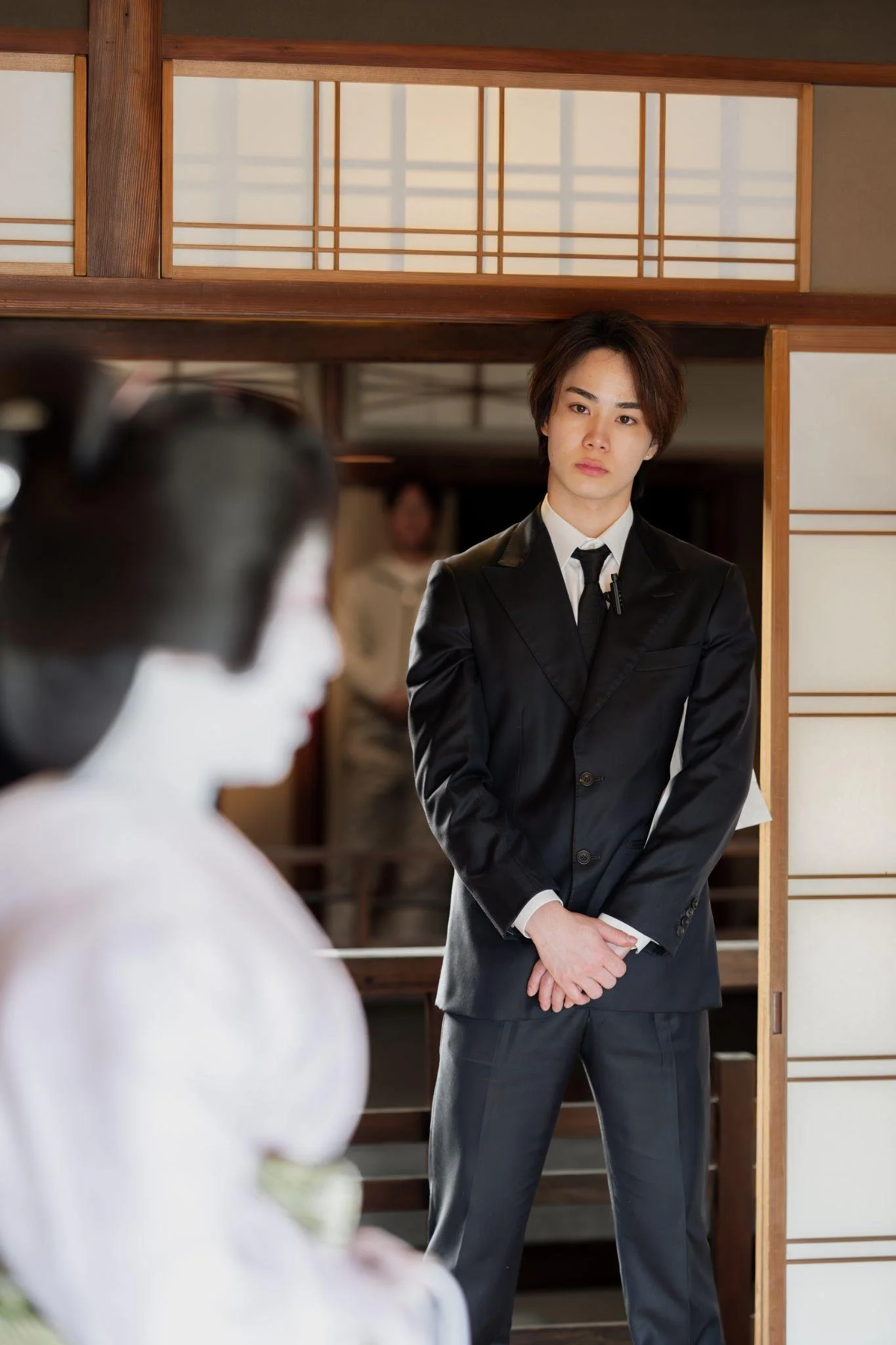
Although I was quite nervous when visiting the ochaya, I was warmly welcomed. I was overwhelmed by the traditional architecture, and the proprietress carried herself with such elegance and poise that it created a unique kind of tension. These are people I would never normally meet, either in Japan or in New York. I also learned how much preparation and coordination had gone into making this day possible.
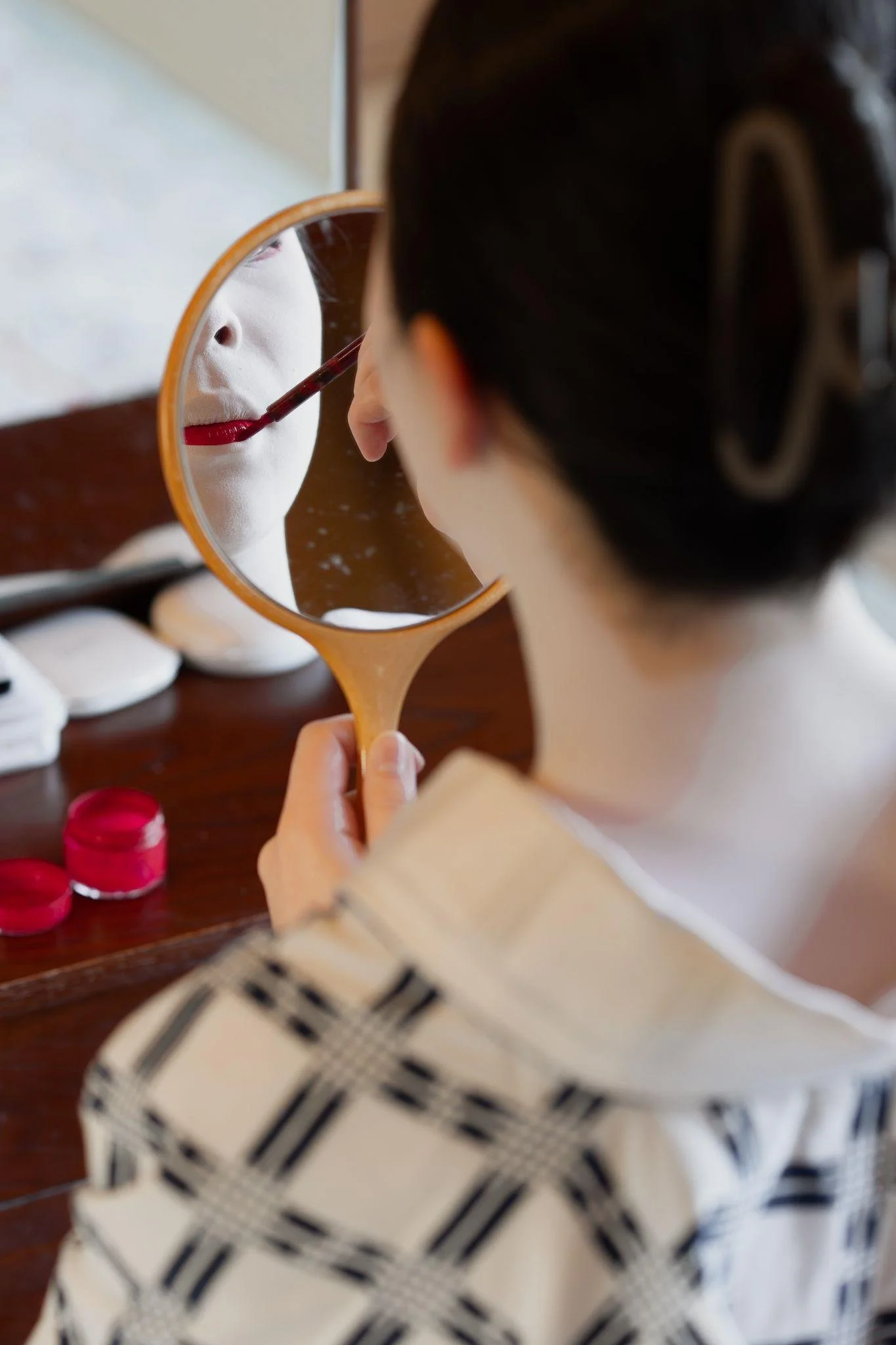
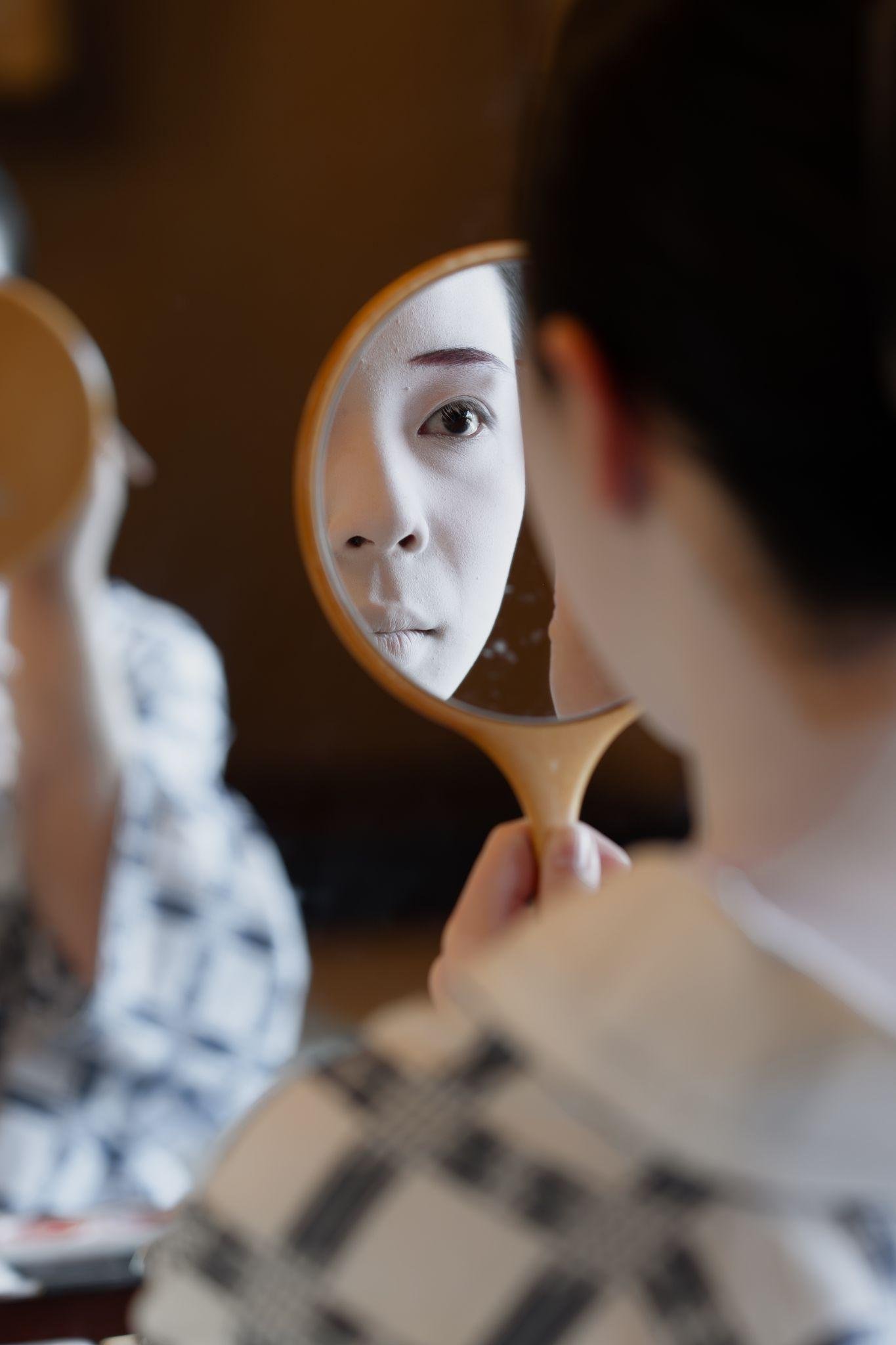
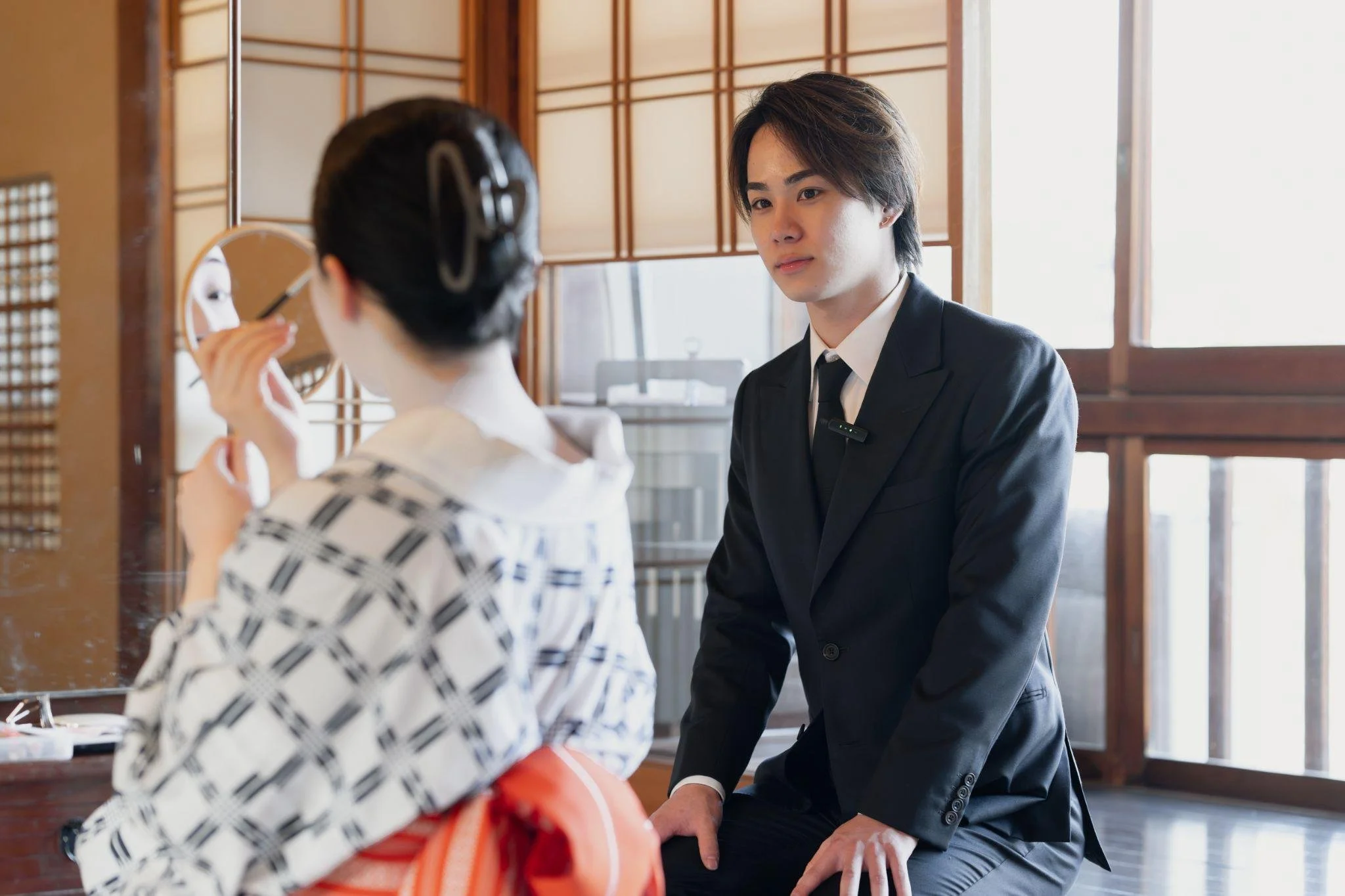
One of the surprises arranged for me was the opportunity to observe Ichikoto-san's makeup process from a completely bare face to the finished look, without anything being concealed. This traditional makeup is not something even my grandmother would have done in daily life; it is a technique that today exists almost entirely within history. I held my breath, transfixed by the delicate process unfolding up close before me.
I was mesmerized by the steady application of the white paint, and the precision of the fine black lines and red lip. This traditional makeup has been passed down through generations and has remained largely unchanged to this day.
After the makeup session, I was also given the opportunity to interview the geiko directly. I invited a close American friend to join the conversation, and we were even able to take a walk around the neighborhood together.
Through this experience, I learned about the relationship between performance and daily training, and how years of discipline shape not only technical skill but also posture and presence. I also served as an interpreter and cultural bridge for my American friend, helping to deepen mutual understanding.
I would like to summarize some of what I learned from the interview.
The Art of Preparation
Observing the makeup process,
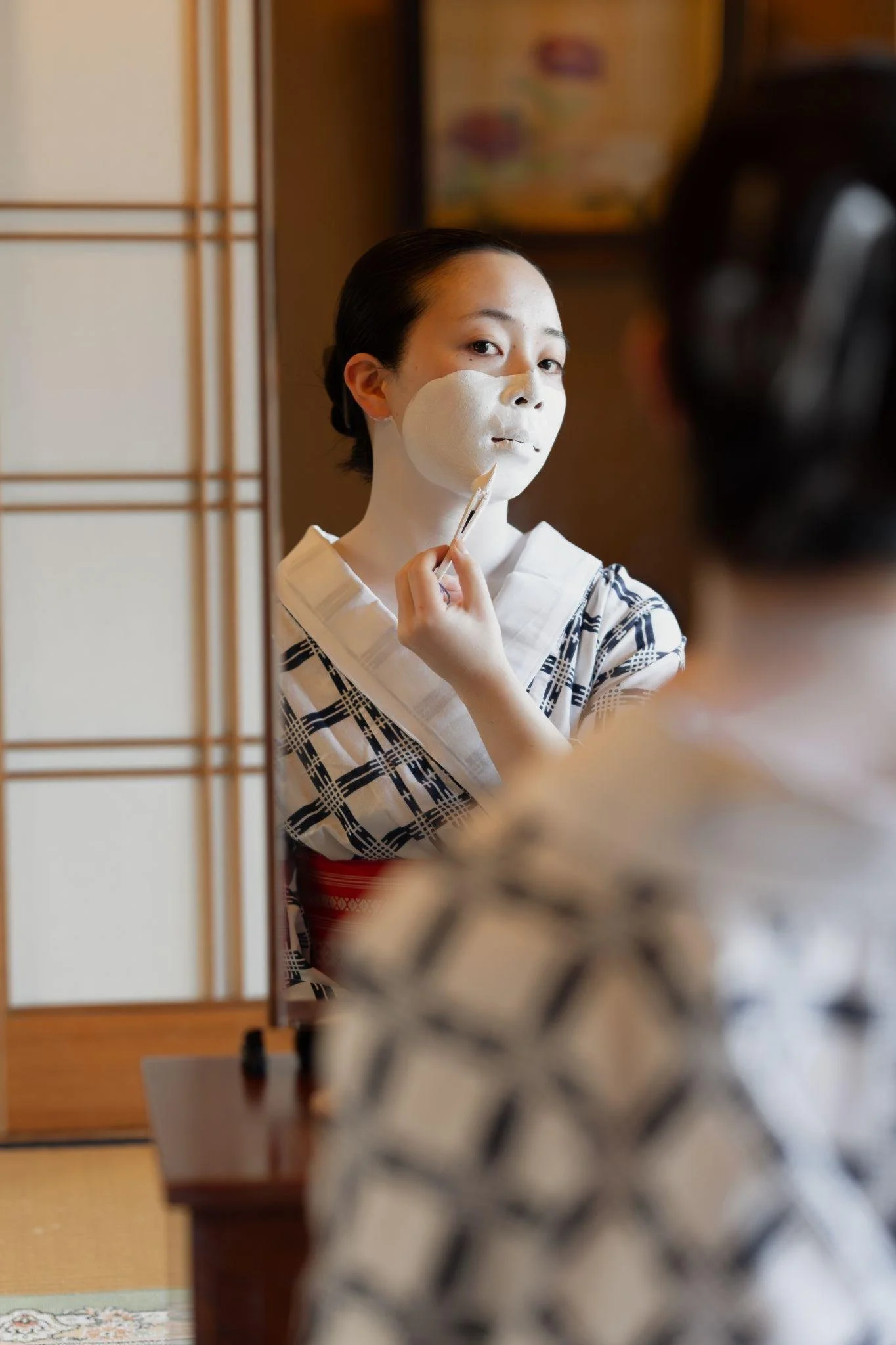
I was struck by the high level of precision and awareness involved. Geiko makeup is composed of only three colors: white, red, and black. Despite this limited palette, the process is extremely delicate and requires advanced technique and a refined aesthetic sense.
There was no wasted movement. From the white foundation, dabbed onto the face in a perfectly even coat, to the fine detailing around the eyes, to the placement of red accents, every step reflected years of disciplined practice. What may appear simple at first glance is actually the result of highly refined skill.
Mastery Is Built Over Time
Geiko begin their training at a young age and spend many years honing their craft. The geiko I met left her family after graduating from middle school, moved to Kyoto, and apprenticed under an okami (proprietress) to pursue this path. She continues to practice daily even now.
In a way, it reminded me of my own experience studying abroad. Even among fellow Japanese, geiko dedicate themselves wholeheartedly to Kyoto’s traditional performing arts, and their passion and effort were deeply evident.
The Arts: Dance and Music
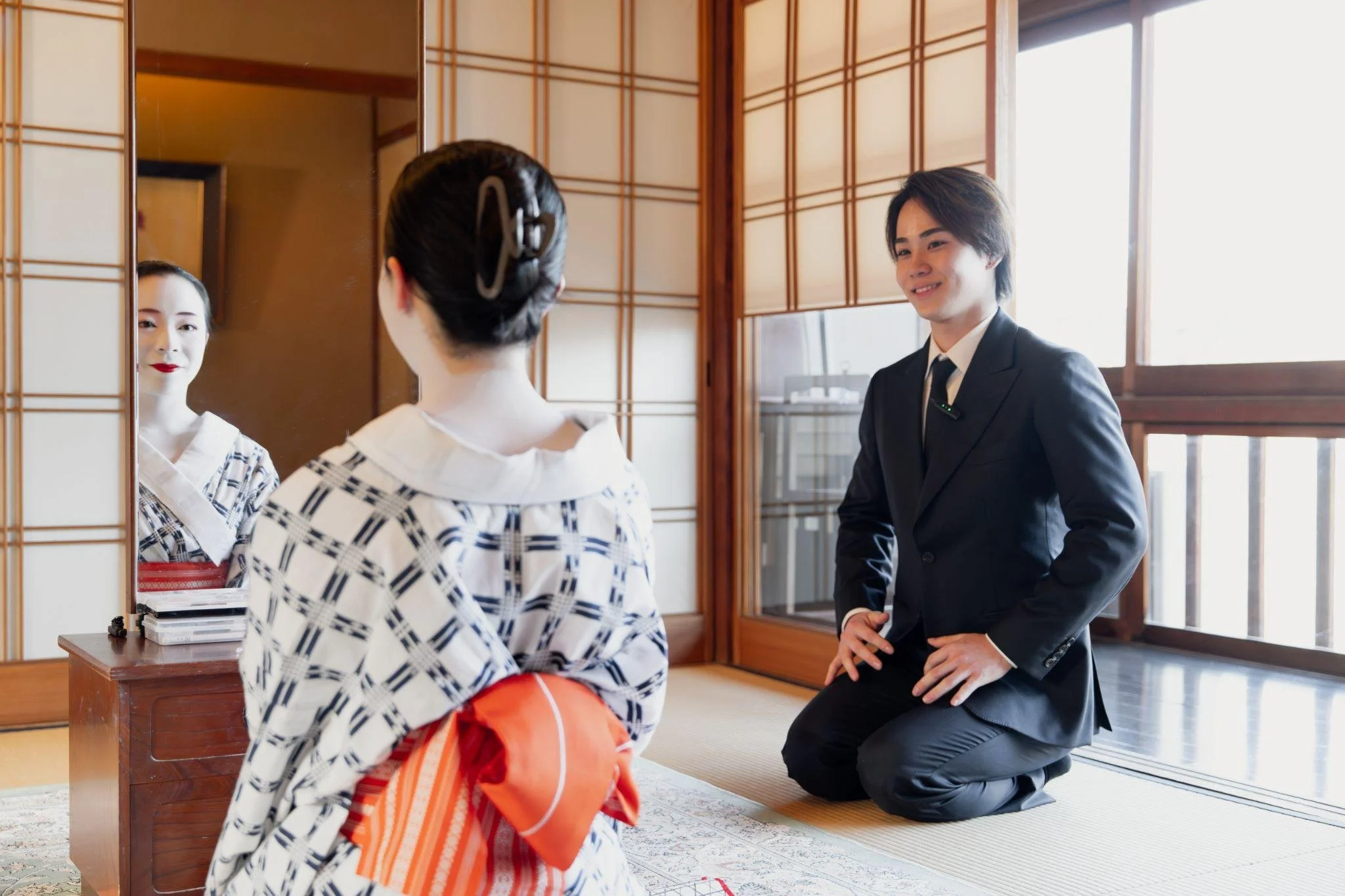
In addition to makeup, geiko train in etiquette, movement, and performance arts such as dance and music. Through this accumulation of practice, I realized that true mastery cannot be achieved overnight—it is cultivated through continuous effort.
Precision as Respect for Tradition
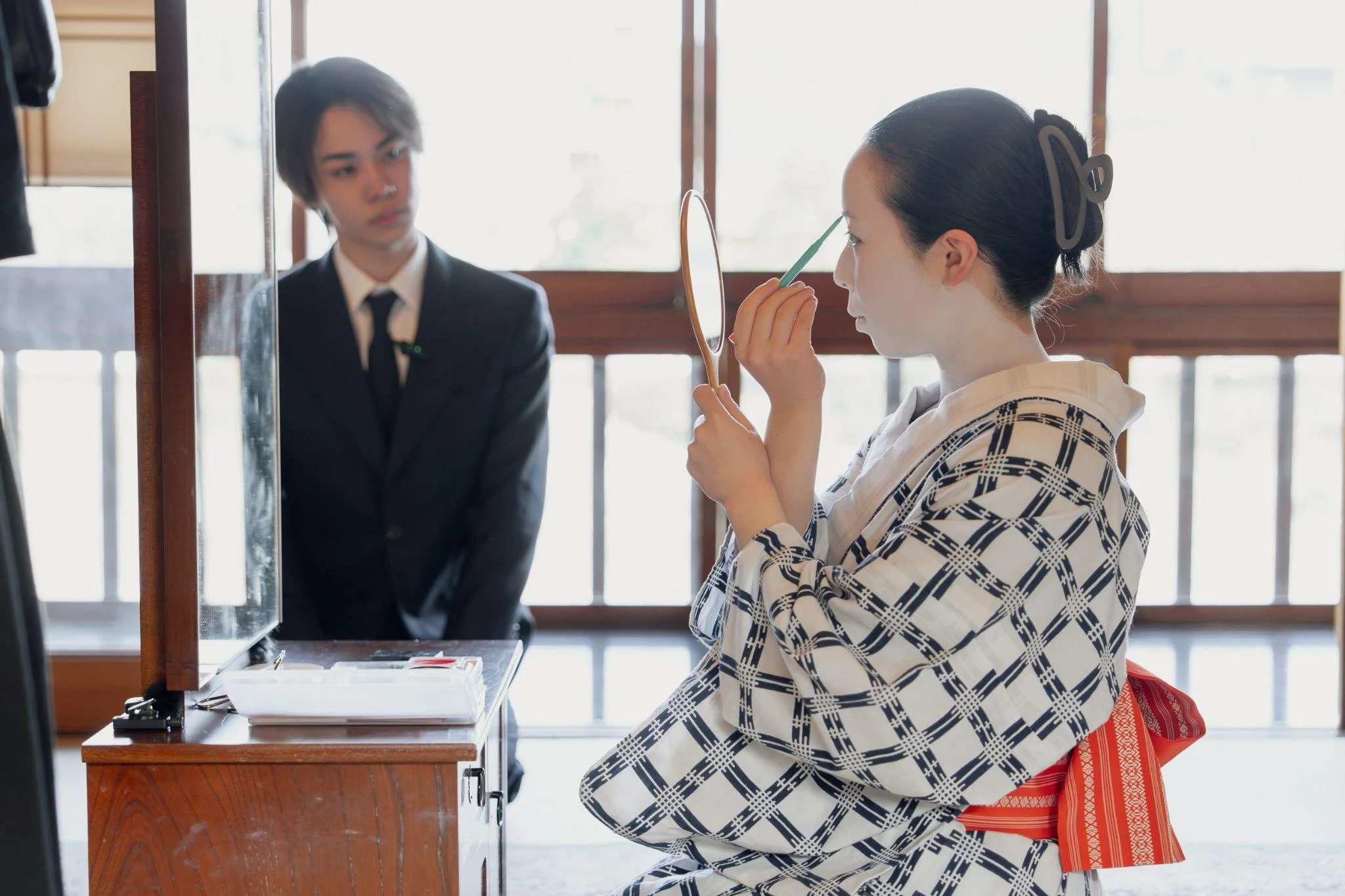
Every step of the preparation process reflected a deep respect for tradition. The precision in makeup and kimono dressing is not only for aesthetic beauty, but also an expression of responsibility in preserving culture. Attention to detail reflects one’s mindset and values.
Self-Care as Disciplined Practice
This experience also changed my perspective on self-care. For geiko, it is not something done on a whim, but a disciplined practice integrated into daily life. I came to understand that self-care should be approached consciously and consistently—much like an athlete’s daily training.
Conclusion
Through classical performing arts such as Kokuho and kyogen, I have begun to think about the connection between traditional makeup and modern idol culture.
This spring break experience went beyond cultural understanding—it gave me the opportunity to reflect deeply on discipline, expression, and the importance of consistency. I am sincerely grateful to have been welcomed into such a special space, to have spoken directly with a geiko, and to have served as a cultural bridge through interpretation.
I also came to appreciate how much careful preparation and coordination by many people made this experience possible.
Moving forward, I hope to continue designing my life around themes of beauty, health, traditional arts, and contemporary culture, and to bring smiles to others through these pursuits.
Thank you very much.